Hands-on precision, not just gut feeling
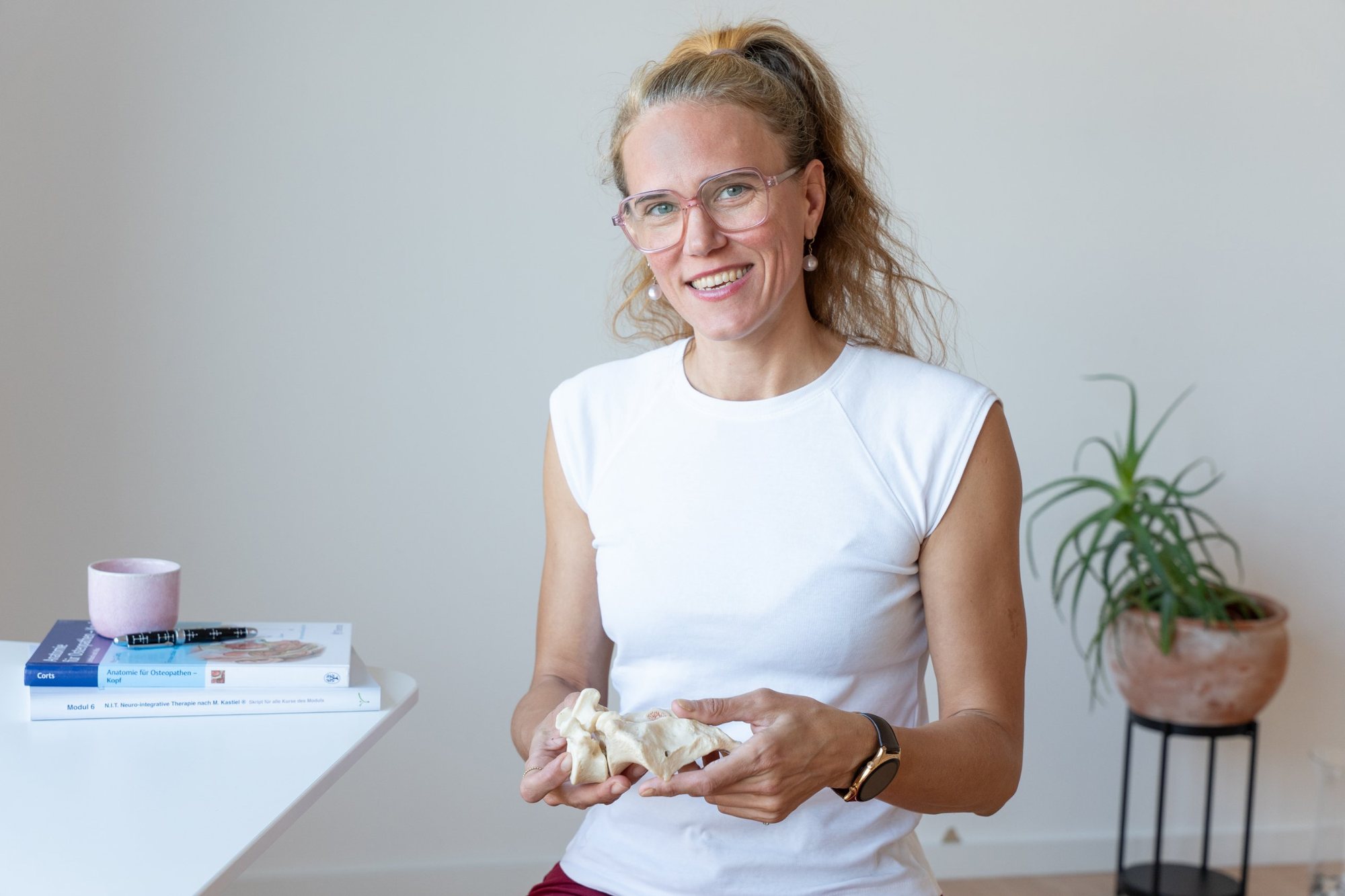
For me, osteopathy is not just a gut feeling. Every treatment is based on a sound understanding of anatomy and biomechanics – plus precision in the hands.
Osteopathy – one system, three pillars
In my work, one area rarely stands alone. The three pillars interlock, so that I can look at the body as a whole.
- Craniosacral
- Skull, spine and sacrum with their connective tissue – I feel for tension and mobility.
- Parietal
- Musculoskeletal system – bones, muscles, joints.
- Visceral
- Internal organs, fascia & tissue tension.
Craniosacral – head, spine and sacrum. The skull, spine and sacrum are connected through the membranes around the brain and spinal cord. With my hands I feel how mobile this area is and where there is tension. The touch is light and calm. Some people find it relaxing. How it is for you will show in the treatment. Craniosacral work does not replace a medical check-up: with new or severe headaches or dizziness, see a doctor first.
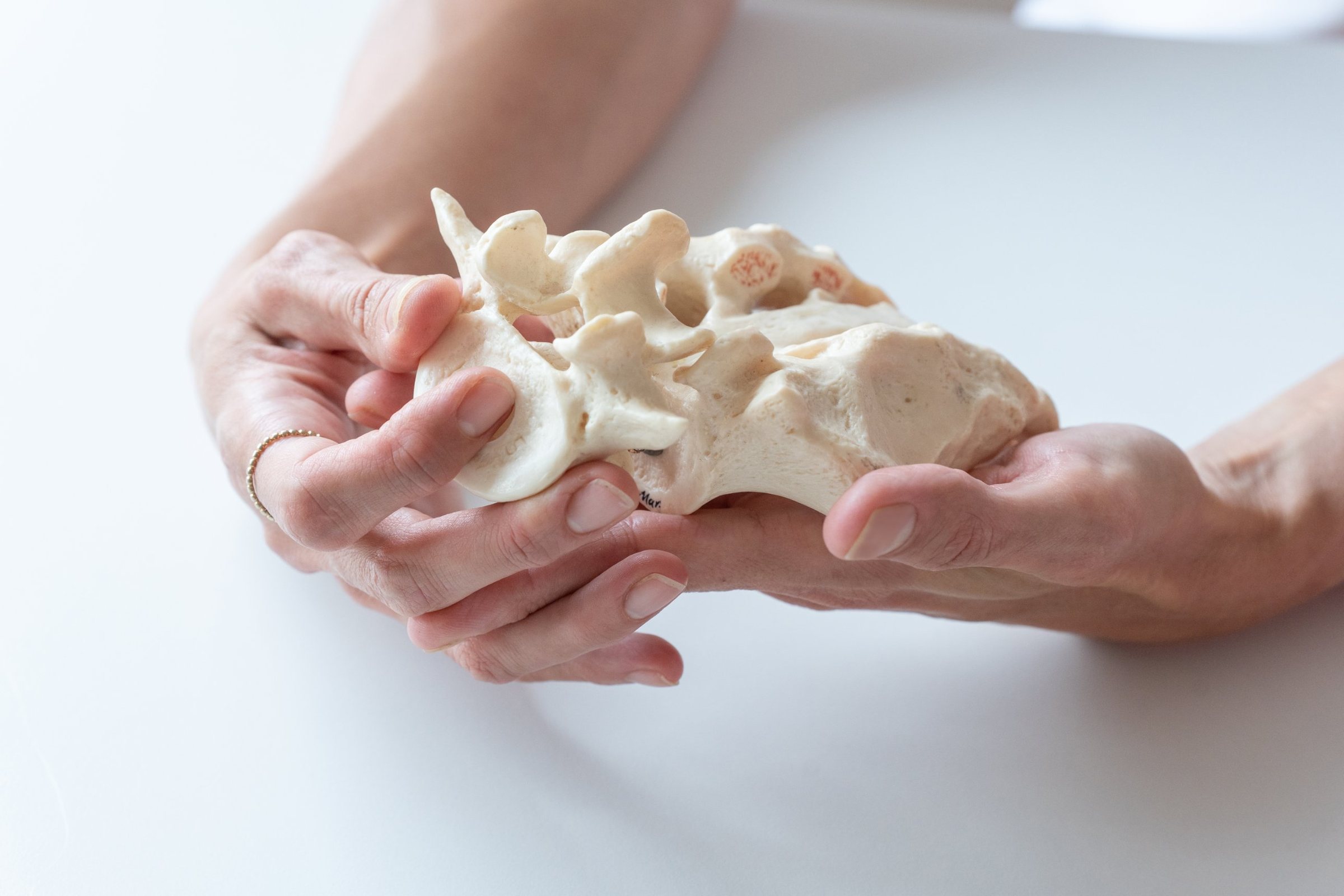
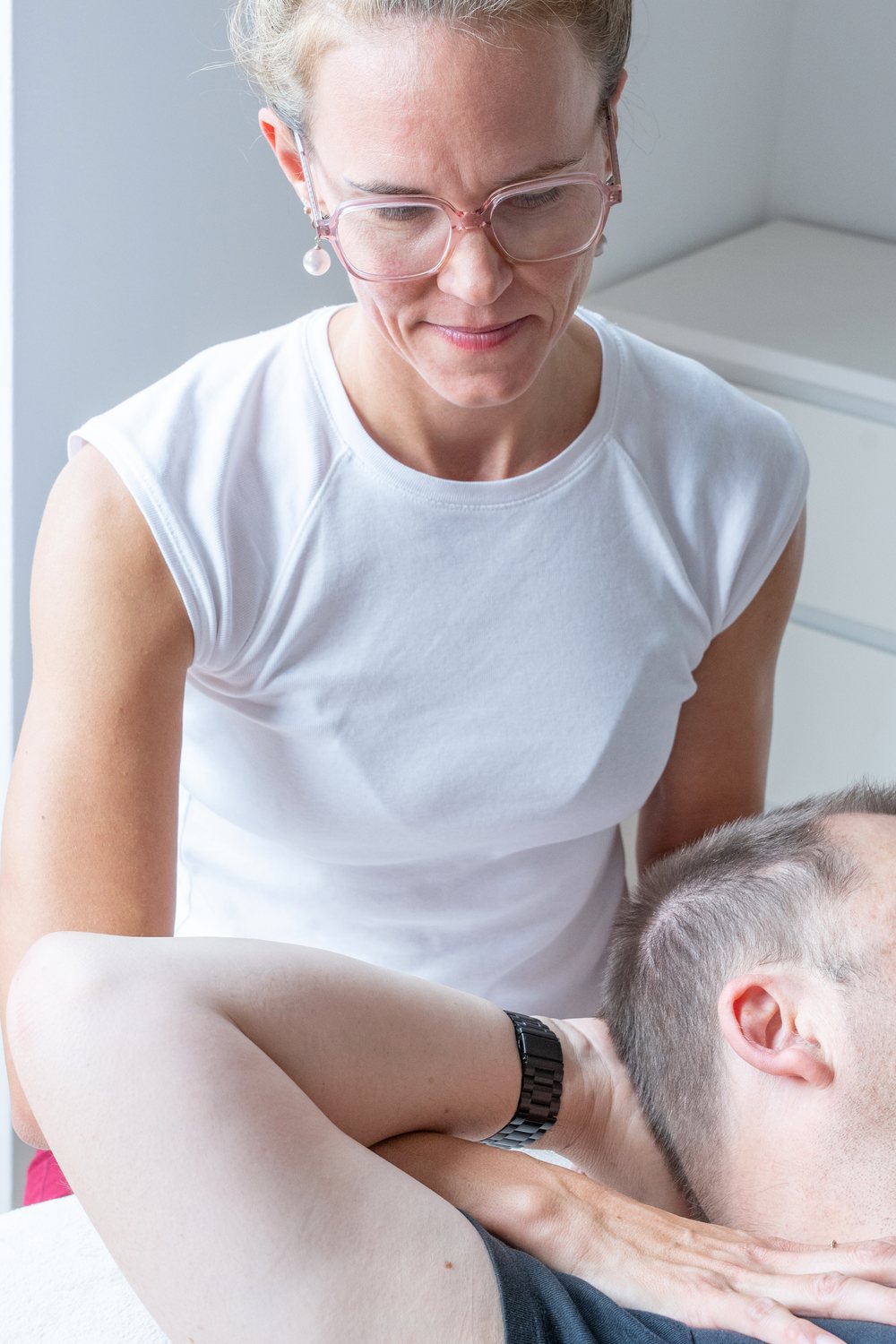
Parietal – bones, muscles and joints. The parietal part of osteopathy deals with the musculoskeletal system: bones, joints, muscles, ligaments and tendons. I work step by step and begin osteo-articularly: “osteo” stands for the bones, “articular” for the joints. I check whether they sit well and move freely. Next come muscles and ligaments, then soft tissue and nerves. You can tell me at any time if something is too much.
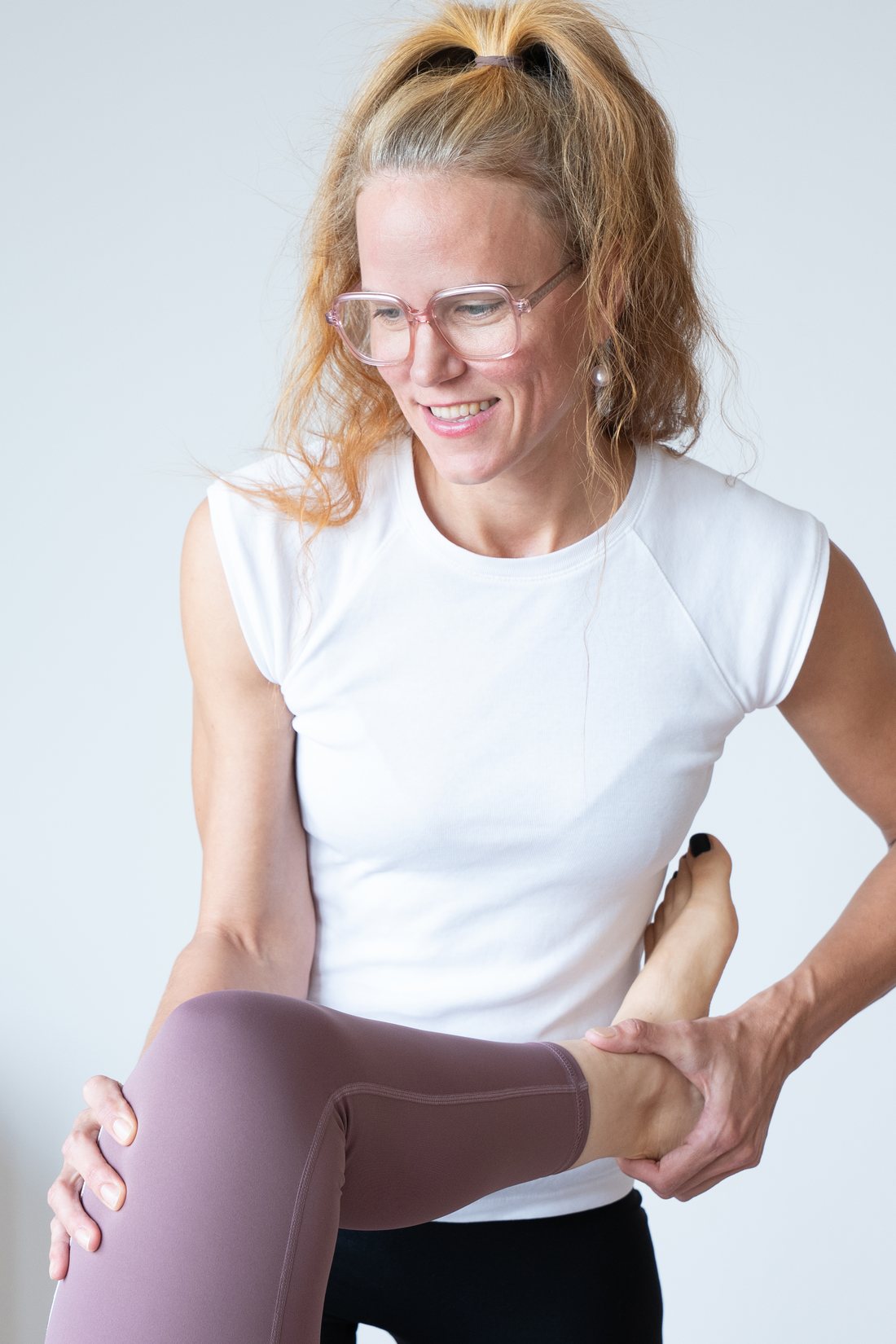
Visceral – internal organs and their connective tissue. The internal organs are suspended in connective tissue, lie against each other with some freedom of movement and are connected to the trunk and the spine through their suspensions. With my hands I feel how mobile this tissue is and where there is tension. This can be related to posture, scars after operations or the interplay with back and pelvis. I do not diagnose diseases of the organs. If there are signs of an illness, it belongs in medical hands.
How I work
- 01
Functional anatomy
Knowledge of muscles, joints, fascia and nerves and how they work together is the basis of every examination.
- 02
Posture and biomechanical chains
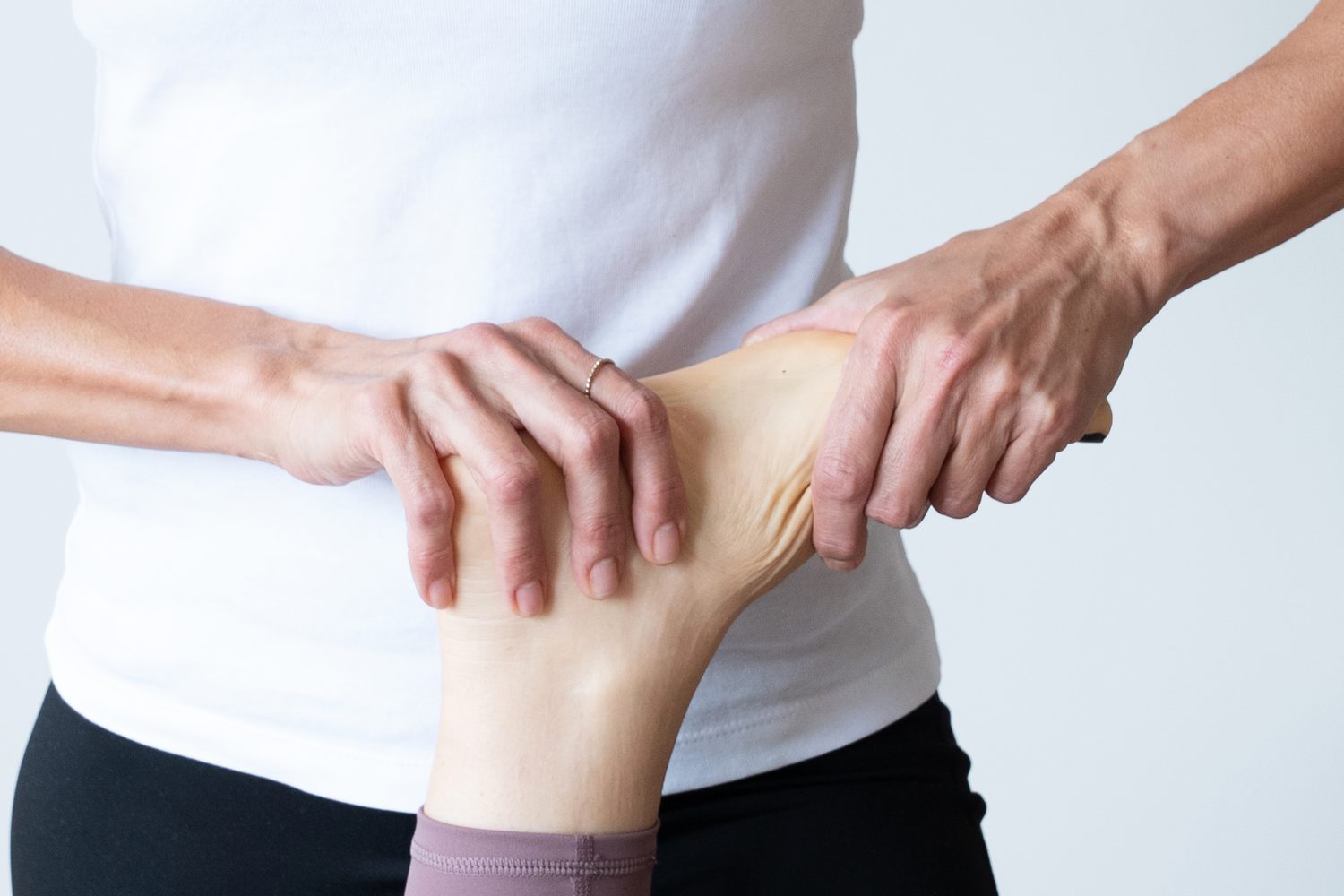
The body is mechanically connected. A restriction in one place can create compensation patterns in another – that is where I look too. The body works as a whole: if the foundation, meaning feet and pelvis, is not right, the body has to compensate further up. That is why I look at your overall posture and alignment.
- 03
Structured examination
Every treatment starts with a targeted examination of movement and touch, including osteopathic tests, with which I locate restrictions.
- 04
Targeted technique
Depending on the findings, I first look osteo-articularly, meaning at bones and joints, and then work on muscles, ligaments and fascia. For this I use gentle mobilisation, muscle energy techniques, targeted joint impulse techniques and other osteopathic techniques, tailored to what your body shows.
What to expect
Calm, thorough and unhurried. I take the time to listen carefully and look closely. The first session lasts about 60–90 minutes.
- 1
Conversation
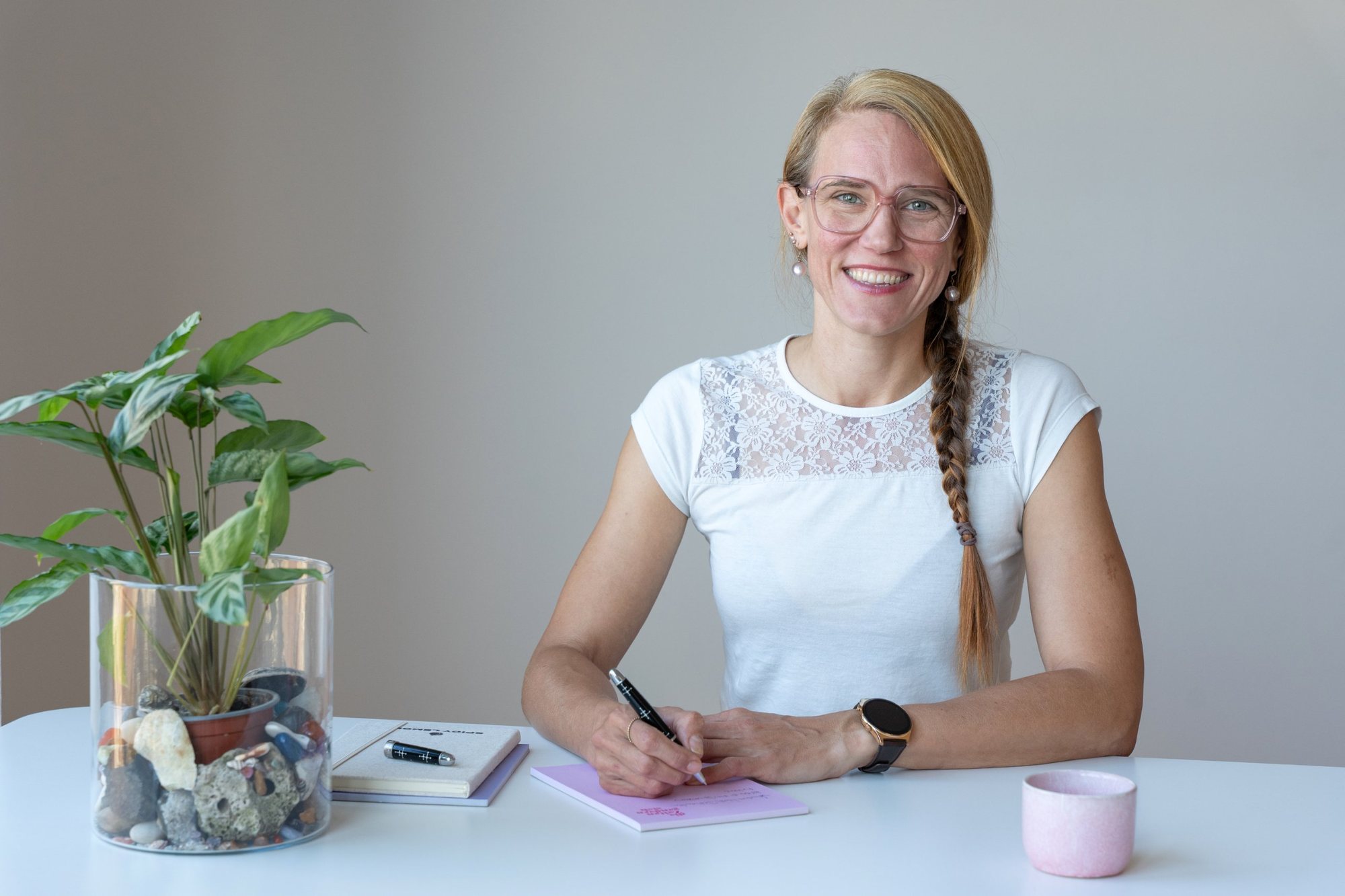
We talk about your complaints and your history: how long they have been there, when they get worse and what does you good. Everyday life, sleep and habits are part of it, as are earlier accidents, operations and injuries.
- 2
Examination & treatment
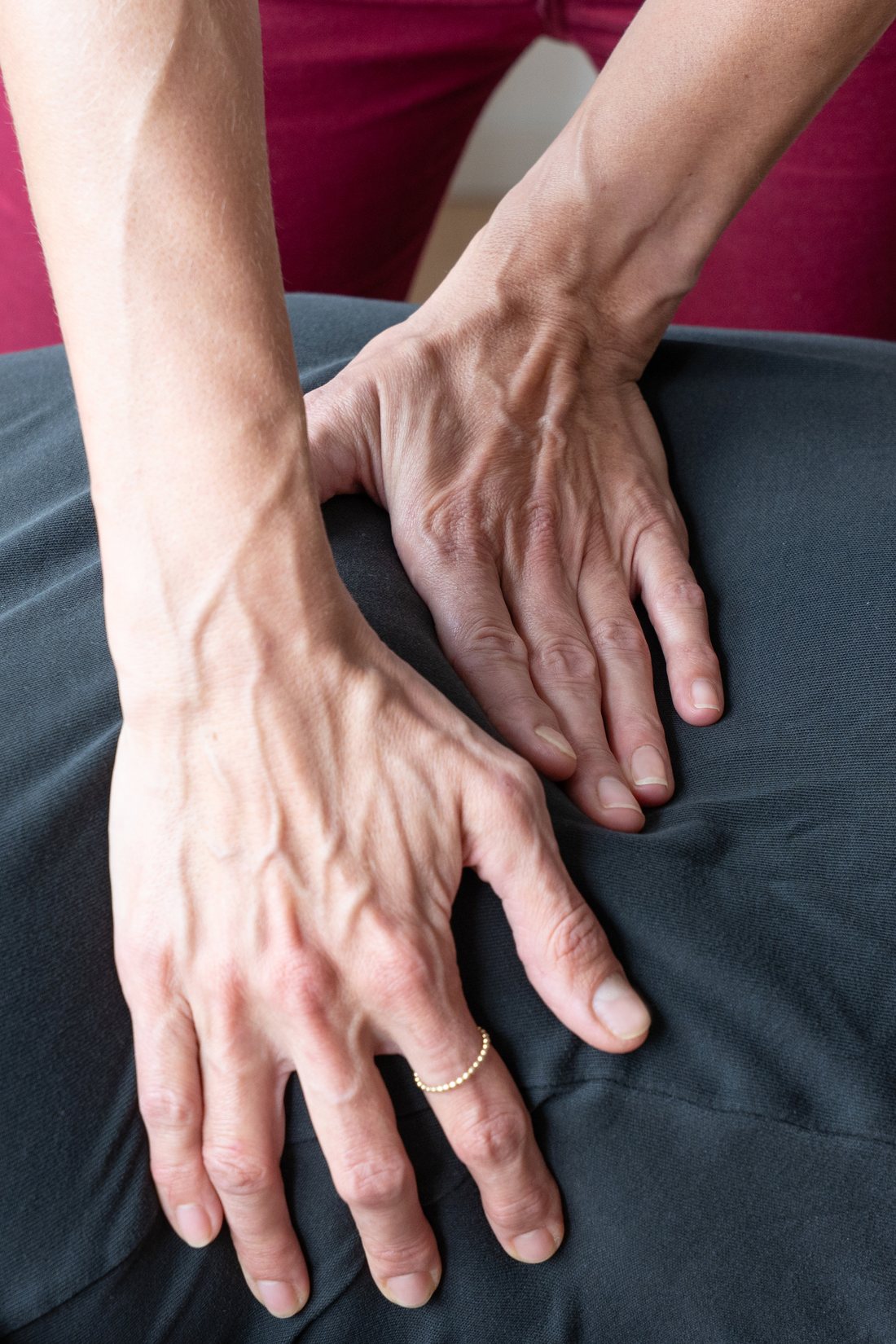
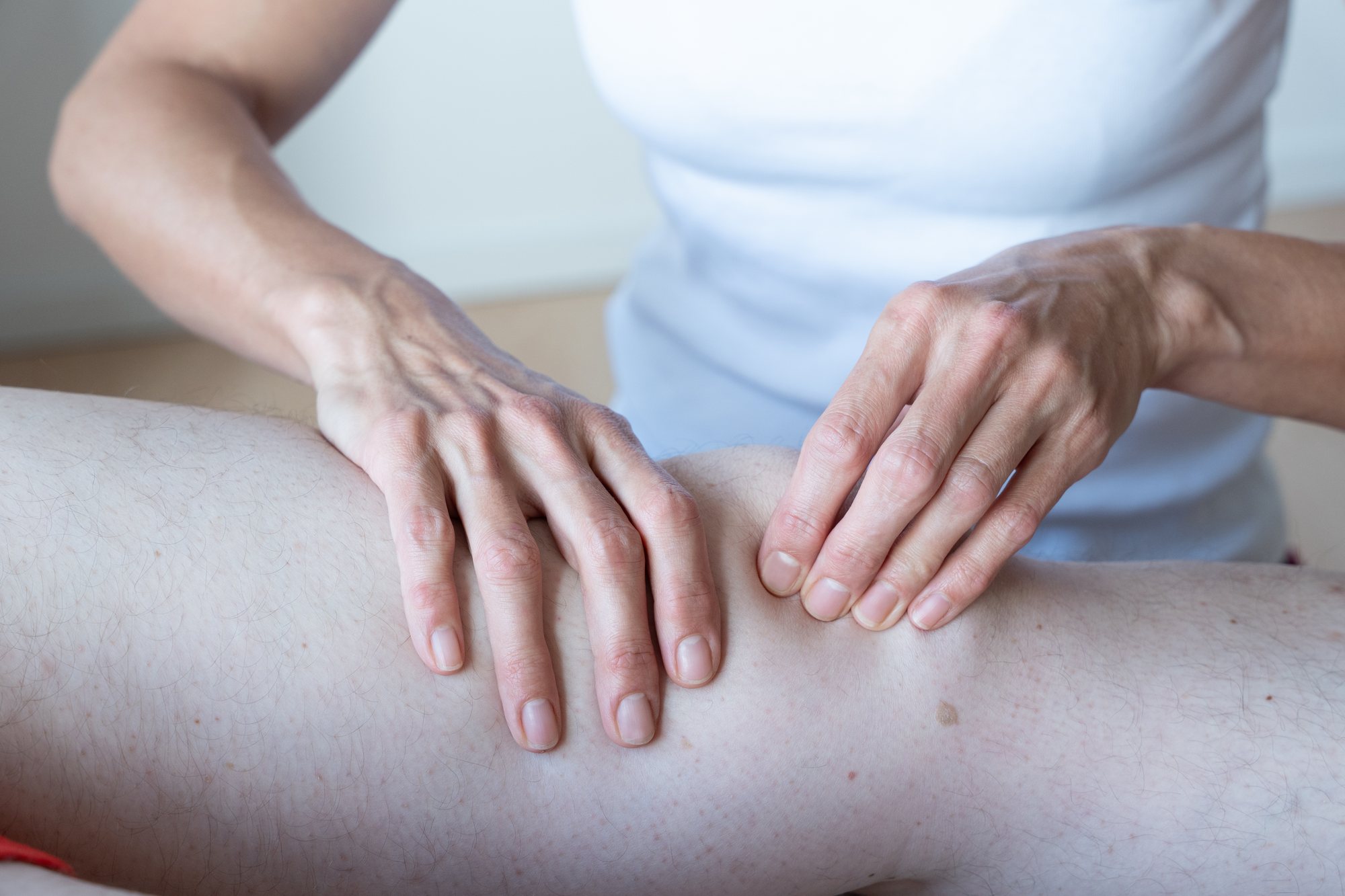
With my hands I feel movement and tension in the body. I use classical and modern osteopathic tests for this. Then I treat gently and precisely – usually comfortably dressed on the treatment table.
- 3
Afterwards
At the end we feel back together: what did you notice, what did I feel and observe? We talk about what you can do yourself, and decide together whether further appointments make sense.
N.I.T. Neuro-integrative Therapy after M. Kastiel®
Alongside osteopathy I work with a movement-based approach. N.I.T. draws on principles from osteopathy, Feldenkrais, Qigong and East Asian martial arts. You are not just the recipient of a treatment but take an active part.
- 01
Learning instead of just being treated
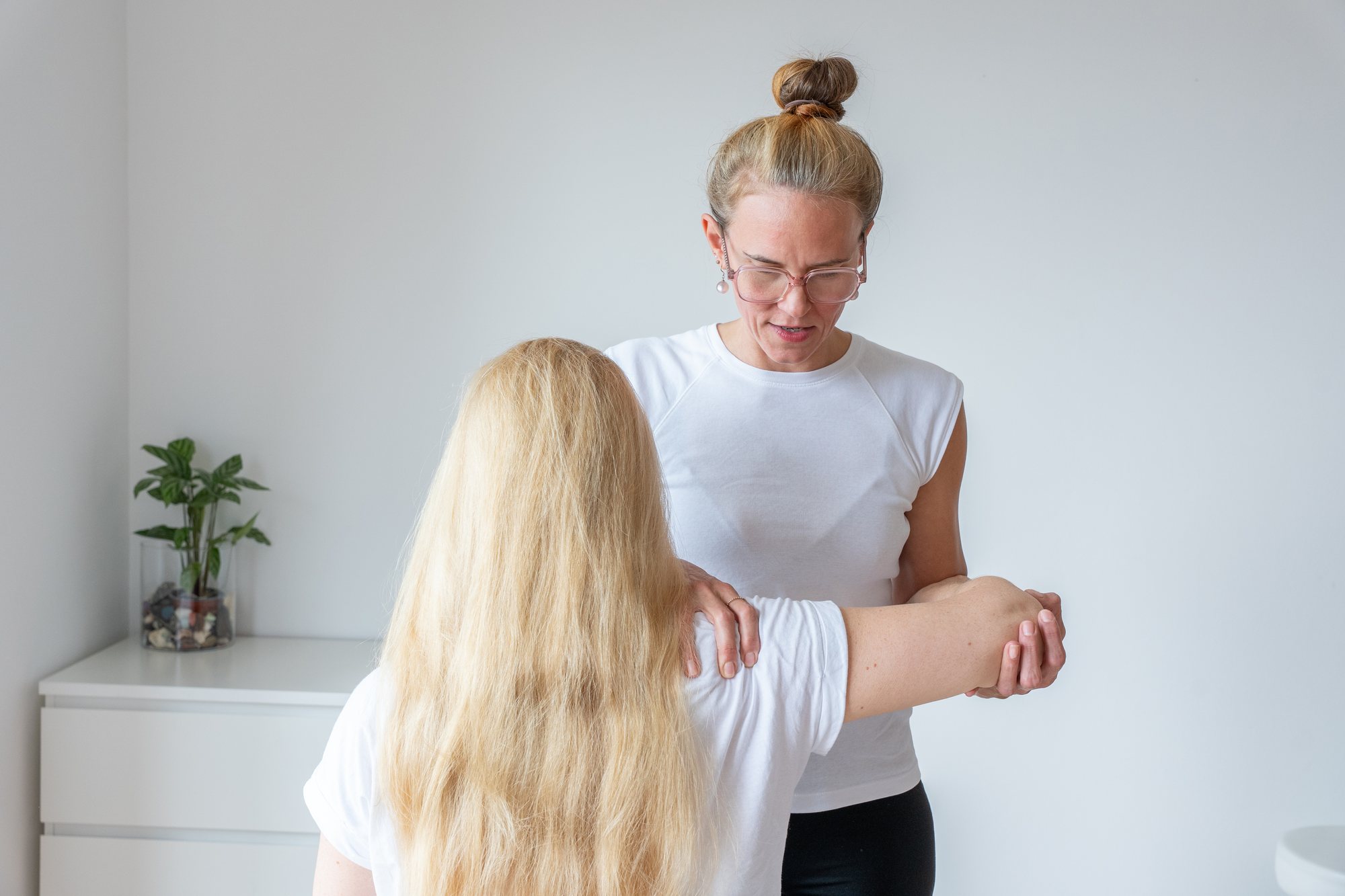
I offer you small suggestions for movement and watch closely how your body responds. You sense, I accompany. That way the session becomes more of a learning experience than a pure treatment.
- 02
Perception at the centre
Joints, ligaments, fascia and muscles constantly report to your brain how your pelvis is positioned and how much tension there is in your back. From this a kind of map of your body emerges. Movements that rarely occur can fade on it. The work invites you to notice them again and use them more freely.
- 03
Small, precise, without force
Less is more: small, targeted movements that arrive exactly where they are needed. Relaxation is the basis for this, so we start calmly and in a position where you feel comfortable.
- 04
Sitting, guarding, stress
Hours of sitting give the body only a few new signals. After a bout of lumbago, the protective posture sometimes stays longer than necessary, and under stress the body can tend to hold on. That too can blur the map a little.
How a session works
We start in a comfortable position that you choose yourself. I suggest a gentle movement, watch how you follow it, and adapt. Step by step we include further areas of the body, so that the body as a whole comes into motion and not just the spot that hurts.
My training in it
Four course blocks of 4 days with 8 hours each (128 hours) at the Medizin & Lebenskunst Akademie, in addition to my osteopathy training.
N.I.T. complements osteopathy and does not replace medical diagnosis or treatment. Whether and how much it helps you varies from person to person; I cannot promise a cure.